Manually adjusted camera lens crosswords are a niche puzzle genre gaining traction, testing photographic knowledge. These puzzles challenge solvers with terminology and features.
Their popularity stems from blending intellectual stimulation with a passion for photography, appealing to enthusiasts and professionals alike.
Today is 04/28/2026 06:58:40 ()
What are Manually Adjusted Camera Lens Crosswords?
These crosswords uniquely focus on the intricate world of camera lenses and their manual adjustments. Unlike general photography puzzles, they delve into specific lens components, settings, and functionalities.
Clues often revolve around aperture values (f-stops), focal lengths (measured in millimeters), focusing mechanisms, and various lens types like prime or zoom lenses. Solvers need a solid understanding of these concepts to succeed.

The puzzles frequently incorporate brand-specific terminology, requiring knowledge of Canon, Nikon, or Sony lens features; They are a stimulating mental exercise for photography buffs!
Why are they Popular?
Manually adjusted camera lens crosswords appeal to a dedicated niche – photography enthusiasts seeking a unique challenge. They offer a stimulating way to reinforce and expand photographic knowledge beyond practical application.
The puzzles provide a mental workout, demanding precise recall of technical details often overlooked in casual shooting. This attracts individuals who enjoy mastering complex systems.
Furthermore, the puzzles foster a deeper appreciation for the artistry and engineering behind camera lenses, resonating with those passionate about the craft.
Understanding Camera Lens Terminology
Camera lens crosswords heavily rely on precise terminology. Familiarity with aperture, focal length, and focusing mechanisms is crucial for successful puzzle completion.
Aperture and its Role
Aperture, expressed in f-stops (like f/2.8 or f/16), controls light entering the lens and impacts depth of field. Crossword clues often reference these numbers, testing your understanding of their relationship to brightness and focus.
A smaller f-stop (e.g., f/2.8) creates a shallow depth of field, ideal for portraits, while a larger f-stop (e.g., f/16) yields greater depth of field, suitable for landscapes. Recognizing these concepts is vital when deciphering camera lens crossword puzzles.
Focal Length Explained
Focal length, measured in millimeters (mm), determines the angle of view and magnification. Crossword clues frequently ask for specific focal lengths associated with lens types – wide-angle (e.g., 24mm), standard (e.g., 50mm), or telephoto (e.g., 200mm).
Shorter focal lengths capture a wider scene, while longer focal lengths magnify distant subjects. Understanding these distinctions is crucial for solving camera lens crosswords, as clues often hint at the lens’s intended use and perspective.
Focusing Mechanisms
Focusing mechanisms are central to camera lens crosswords, often appearing as clues related to rings or systems. Manual focus rings, a staple of traditional lenses, require precise rotation to achieve sharpness. Clues might describe their texture or markings.
Autofocus systems, including modes like single-servo or continuous, also feature prominently. Understanding terms like “front-to-back focusing” or “focus peaking” aids in deciphering complex clues within these photographic puzzles.
Common Clues in Camera Lens Crosswords
Common clues center around aperture, focal length, and lens types. Expect questions about f-stops, millimeter measurements, and distinctions between prime versus zoom lenses.
Clues Related to Aperture Settings
Aperture clues frequently involve numerical f-stop values (like f/2.8, f/8, or f/16) and their corresponding effects on depth of field and light intake. Crosswords might ask for the f-stop representing a shallow depth of field, or the setting ideal for landscape photography.
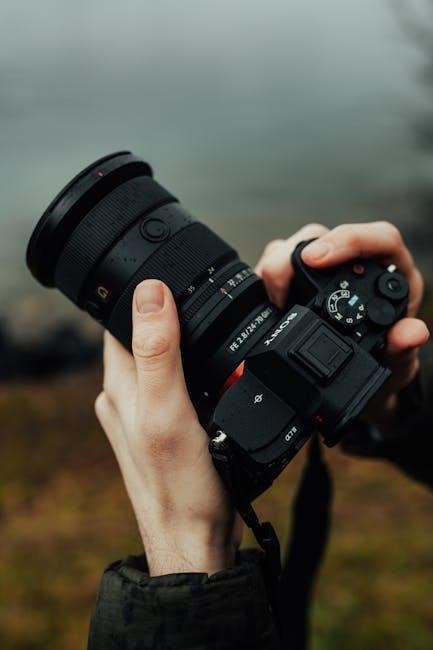
Expect clues referencing terms like “bokeh,” referring to the aesthetic quality of out-of-focus blur, or questions about how aperture impacts exposure. Clues could also describe the relationship between larger apertures (smaller f-numbers) and increased light, or smaller apertures (larger f-numbers) and greater depth of field.
Clues Related to Focal Length
Focal length clues often center around classifying lenses as wide-angle, standard, or telephoto, based on their millimeter (mm) measurement. A crossword might ask for the focal length range typical of a portrait lens, or the length suited for capturing distant wildlife.
Clues could describe the field of view – wide angles offering broader perspectives, and telephotos providing magnification. Expect questions about how focal length affects image compression and perspective. Understanding terms like “zoom” and “prime” lenses in relation to focal length is crucial.
Clues Related to Lens Types (Prime, Zoom)
Lens type clues frequently differentiate between prime and zoom lenses. A prime lens clue might ask for a lens with a fixed focal length, known for sharpness and wider apertures. Zoom lens clues will focus on their variable focal length, offering versatility.
Expect questions about the advantages of each type – primes for low-light performance, zooms for convenience. Clues could describe scenarios where one lens type is preferred over the other, testing practical photographic knowledge.
Decoding Crossword Clues: Techniques
Solving these crosswords requires understanding photographic terms and applying deduction. Context clues within the puzzle are vital, alongside considering lens markings and technical jargon.
Using Context Clues
Context clues are paramount when tackling camera lens crosswords. Analyze surrounding answers; they often hint at the solution. For example, if clues mention “low light” or “shallow depth of field,” consider aperture-related terms like “f-stop” or specific f-numbers.
Pay attention to clue phrasing – is it describing a function, a part of the lens, or a brand? Crossword grids provide intersecting letters, offering valuable confirmation. Remember that clues relating to image quality often point towards lens features or settings impacting sharpness and clarity.
Considering Lens Markings
Lens markings are crucial for crossword success. Familiarize yourself with common abbreviations like “mm” for millimeters (focal length) and “f/” denoting aperture. Look for clues referencing these markings directly.
Lens barrels display focal length ranges (e.g., 24-70mm), maximum aperture (e.g., f/2.8), and sometimes, specific lens series designations. These markings often appear in clues. Knowing what these symbols represent unlocks solutions. Remember to consider both the numbers and the letters present on a typical lens.
Understanding Technical Jargon
Technical jargon dominates camera lens crosswords. Terms like “bokeh,” “chromatic aberration,” and “vignetting” frequently appear as clues or answers. A solid grasp of photographic principles is essential.
Deciphering clues requires knowing what these terms mean. For example, understanding that “bokeh” refers to the aesthetic quality of out-of-focus areas is key. Don’t shy away from researching unfamiliar terms; online resources are invaluable. Mastering this language unlocks the crossword’s challenges.
Specific Lens Features & Crossword Clues
Lens features like image stabilization, autofocus systems, and manual focus rings are common crossword elements. Clues often test knowledge of their functions and mechanics.
Image Stabilization Systems
Image stabilization (IS) is a crucial lens feature frequently appearing in camera lens crosswords. Clues might reference its purpose – reducing blur from camera shake – or specific technologies like optical or digital IS.
Crossword solvers should understand that IS allows for sharper images at slower shutter speeds. Clues could describe the system’s effectiveness in “stops,” representing the degree of shake reduction. Expect terms like “VR” (Vibration Reduction – Nikon), “OS” (Optical Stabilization – Tamron), or “IS” (Image Stabilization – Canon) to appear as answers.
Autofocus Systems & Modes

Autofocus (AF) systems are common crossword fodder, testing knowledge of various modes and technologies. Clues may ask about single-servo AF (for static subjects), continuous AF (for moving subjects), or face/eye detection AF.
Crossword puzzles often feature terms like “AF-S,” “AF-C,” or “DMF” (Direct Manual Focus – Nikon). Understanding the differences between these modes is key. Clues might describe scenarios where a specific AF mode would be most effective, requiring solvers to apply practical photographic knowledge.
Manual Focus Rings
Manual focus rings are central to the “manually adjusted” aspect of these crosswords, frequently appearing as clues. Puzzles often test knowledge of ring smoothness, throw (the rotation distance for full focus range), and the presence of focus distance scales.
Clues might describe the tactile feel of a ring (“smooth, dampened rotation”) or ask about markings on the lens barrel. Understanding terms like “full-time manual focus” (allowing manual override even when in AF mode) is crucial for success.

Popular Camera Lens Brands in Crosswords

Lens brand clues frequently appear, testing familiarity with Canon, Nikon, and Sony lenses. Crosswords often reference specific lens series or technologies from these manufacturers.
Canon Lens Clues
Canon, a dominant force in photography, frequently features in these crosswords. Clues might reference their “L-series” lenses, known for professional quality and red rings. Expect questions about Canon’s Image Stabilization (IS) technology, or specific lens designations like EF or RF mounts.
Crossword creators often test knowledge of Canon’s USM (Ultrasonic Motor) focusing system, or their specialized lenses like macro or tilt-shift options. Clues could also involve Canon’s color science or popular zoom ranges, challenging solvers to recall specific model numbers or features.
Nikon Lens Clues
Nikon lenses are crossword staples, often appearing with clues referencing their renowned sharpness and build quality. Expect questions about Nikon’s VR (Vibration Reduction) image stabilization, or their distinct lens classifications like Nikkor. Clues may test knowledge of Nikon’s F-mount, or the newer Z-mount system.
Crosswords frequently feature Nikon’s ED (Extra-low Dispersion) glass, crucial for reducing chromatic aberration. Solvers might encounter clues about Nikon’s Nano Crystal Coat, enhancing image clarity, or specific focal lengths popular among Nikon photographers.
Sony Lens Clues
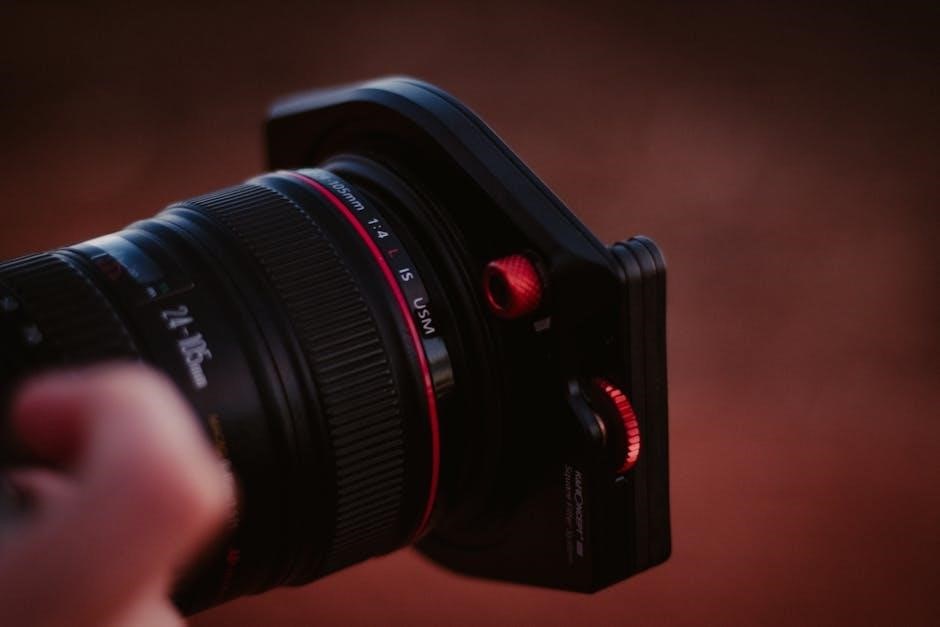
Sony lenses in crosswords often revolve around their advanced autofocus systems and full-frame E-mount. Clues might reference Sony’s Direct Drive SSM (Super Sonic Motor) for quick, quiet focusing, or their OSS (Optical SteadyShot) image stabilization technology. Expect questions about G Master lenses, known for exceptional image quality.
Crosswords may test knowledge of Sony’s FE lenses designed for full-frame cameras, or their APS-C E-mount counterparts. Clues could involve Sony’s unique lens coatings, or specific features like internal focusing and zooming.
Troubleshooting Difficult Clues
Stuck on a clue? Consider ambiguity, utilize online lens databases, and examine diagrams. Crossword solving benefits from researching technical jargon and exploring photography forums.
When the Clue is Ambiguous
Ambiguous clues are common hurdles in camera lens crosswords. Often, a single term can apply to multiple lens features or settings. Carefully analyze the clue’s wording, looking for subtle hints within the phrasing.
Consider the clue’s length; a shorter answer suggests a more fundamental concept. Cross-referencing with already filled-in answers provides valuable context. If still unsure, explore potential meanings of the term within photography, and don’t hesitate to consult online resources for clarification.
Using Online Resources for Help
Stuck on a clue? Numerous online resources can aid camera lens crossword solvers. Lens databases offer detailed specifications and terminology. Photography forums provide communities for discussion and assistance.
Manufacturer websites (Canon, Nikon, Sony) are invaluable for understanding specific lens features. Image searches for lens diagrams can reveal markings and components. Remember to verify information from multiple sources to ensure accuracy and enhance your understanding.
Checking Lens Diagrams
Lens diagrams are crucial for deciphering crossword clues related to physical lens features. Focus rings, aperture scales, and distance markings are often referenced. Diagrams help visualize these components and their functions, aiding in clue interpretation.
Online resources and manufacturer manuals provide detailed diagrams. Pay attention to internal element arrangements, as these can be hinted at in clues. Careful examination of diagrams can unlock challenging answers and deepen your understanding of lens construction.
Camera Raw and Photoshop Integration
Camera Raw filters within Photoshop are essential for processing images from manually adjusted lenses. Adjustments impact image quality, influencing how clues relate to final results.
Opening Camera Raw Filters in PS
Accessing Camera Raw is crucial when working with images captured using manually adjusted lenses, as it allows for detailed control over initial processing. To open a Camera Raw filter in Photoshop (PS), select the image layer and navigate to Filter > Camera Raw Filter (shortcut: Shift+Ctrl+A).
This opens a dedicated window for adjustments. Understanding these settings is vital for crossword solvers, as clues often reference specific parameters like white balance or exposure, directly impacting the final image and potentially the answer. The process enables detailed image manipulation.
Camera Raw Preference Settings
Optimizing Camera Raw preferences is essential for smooth performance, especially when dealing with RAW files from manually adjusted lenses. Access preferences via Edit > Preferences > Camera Raw. A key setting is “Use Graphics Processor,” which can cause issues if conflicting with your GPU.
Disabling this option often resolves crashes or sluggish behavior. Understanding these settings aids crossword solving, as clues might allude to processing limitations or optimal workflows. Proper configuration ensures a stable editing experience.
GPU Conflicts and Camera Raw
GPU conflicts frequently plague Photoshop users, manifesting as Camera Raw freezes or unresponsive behavior when processing RAW images from lenses. This often occurs after Photoshop updates, as compatibility issues arise. The core problem lies in the interaction between Photoshop, Camera Raw, and the graphics card driver.
Disabling “Use Graphics Processor” in Camera Raw preferences (Edit > Preferences > Camera Raw) is a common fix. Crossword clues might indirectly test knowledge of these troubleshooting steps.
Advanced Lens Concepts for Crossword Solvers
Advanced concepts like chromatic aberration, vignetting, and distortion (barrel/pincushion) frequently appear in challenging camera lens crosswords, testing detailed photographic understanding.
Chromatic Aberration
Chromatic aberration, a common crossword clue subject, refers to color fringing around objects in an image. This optical defect occurs because different wavelengths of light focus at slightly varying points.
Lens design attempts to minimize this, but it’s often present, especially in older or lower-quality lenses. Crossword clues might ask for the cause of “purple fringing” or the type of aberration corrected by specific lens elements. Understanding how lenses handle different colors is crucial for solving these puzzles, often requiring knowledge of lens coatings and glass types;
Vignetting Effects
Vignetting, frequently appearing in camera lens crosswords, describes the reduction of an image’s brightness or saturation toward the periphery compared to the image center. It manifests as darkened corners, a common artifact in photography.
Clues often relate to its causes – lens design, aperture settings, or sensor limitations. Some lenses intentionally introduce vignetting for artistic effect. Solvers need to differentiate between natural vignetting and that corrected by software profiles, testing their understanding of post-processing techniques.
Distortion Types (Barrel, Pincushion)
Lens distortion is a frequent theme in camera lens crosswords, specifically barrel and pincushion distortion. Barrel distortion causes straight lines to bow outwards, resembling a barrel, common in wide-angle lenses. Conversely, pincushion distortion makes lines bow inwards, like a pincushion, typical of telephoto lenses.
Clues test knowledge of which focal lengths exhibit these effects and how software corrects them. Understanding these distortions is crucial for interpreting images and solving related crossword puzzles.
Resources for Camera Lens Information
Online lens databases, photography forums, and manufacturer websites are invaluable for crossword solvers. These resources provide technical details and terminology.
Online Lens Databases
Numerous websites meticulously catalog camera lenses, offering specifications crucial for crossword success. These databases detail focal lengths, aperture ranges, and focusing mechanisms – key elements frequently appearing as clues.
Exploring these resources allows solvers to quickly verify lens characteristics, decipher ambiguous clues, and expand their overall photographic knowledge. They are particularly helpful when encountering less common or vintage lenses.
Examples include sites dedicated to lens reviews and technical specifications, providing a wealth of information for both casual enthusiasts and dedicated crossword solvers.
Photography Forums and Communities
Online photography forums and communities represent invaluable resources for crossword enthusiasts. These platforms host discussions where members share knowledge about lenses, often dissecting technical details relevant to puzzle clues.
Seeking clarification on a particularly challenging clue within these communities can yield quick and insightful answers from experienced photographers. They often provide context and alternative interpretations.
Furthermore, these spaces frequently feature threads dedicated to photography-related puzzles, offering practice and collaborative solving opportunities for crossword aficionados.
Manufacturer Websites
Camera lens manufacturer websites – Canon, Nikon, Sony, and others – serve as primary sources for detailed lens specifications. These details are crucial when deciphering crossword clues relating to focal length, aperture, or specific lens features.
Product manuals, often available for download, contain precise terminology and diagrams that can unlock ambiguous clues. Exploring these resources provides a deeper understanding of lens mechanics.
Additionally, manufacturers frequently publish articles and guides explaining lens technology, enhancing crossword solvers’ overall photographic knowledge.
Tips for Improving Crossword Solving Skills
Enhance skills by expanding photographic knowledge, practicing regularly, and analyzing past crosswords. Familiarity with lens terminology and features is key to success!
Expanding Your Photography Knowledge
Deepening your understanding of photography is crucial for tackling camera lens crosswords. Focus on lens mechanics – aperture, focal length, and focusing systems – as these are frequently featured.
Explore different lens types (prime, zoom, macro) and their specific characteristics. Study camera brands like Canon, Nikon, and Sony, noting their unique technologies and lens lineups.
Familiarize yourself with advanced concepts like chromatic aberration and vignetting. Utilize online resources, photography forums, and manufacturer websites to broaden your expertise. A solid foundation will significantly improve your solving speed and accuracy.

Practicing Regularly
Consistent practice is key to mastering camera lens crosswords. Start with easier puzzles to build confidence and familiarize yourself with common clues. Gradually increase the difficulty as your knowledge grows.

Analyze completed crosswords, noting recurring themes and clue types. Time yourself to improve speed and efficiency. Don’t be afraid to use resources like online databases and forums when stuck.
Regular engagement will sharpen your lens terminology recall and clue-decoding skills, ultimately making you a more proficient crossword solver.
Analyzing Past Crosswords
Studying previously solved crosswords reveals patterns in clue construction and terminology usage. Identify frequently used lens types, aperture settings, and focal length references. Note the preferred phrasing of clues related to specific brands like Canon, Nikon, or Sony.
Recognize common trickery or wordplay employed by crossword creators. Pay attention to the difficulty level and how it correlates with clue complexity. This retrospective analysis builds a mental library of potential answers.
Ultimately, it enhances your predictive abilities for future puzzles.
The Future of Camera Lens Crosswords
Expect increasing complexity and specialized clues in camera lens crosswords. Digital platforms will offer interactive experiences, while integration with photography apps is plausible.
Increasing Complexity
Future crosswords will likely move beyond basic terminology, delving into nuanced lens characteristics and advanced photographic concepts. Expect clues referencing lesser-known lens features, historical models, and intricate optical principles.
Puzzle creators may incorporate multi-layered clues requiring solvers to combine knowledge of aperture, focal length, and focusing mechanisms. The inclusion of obscure lens abbreviations and manufacturer-specific jargon will also add to the challenge.
Themes centered around specific photographic genres or techniques could further elevate the difficulty, demanding a comprehensive understanding of camera lens applications.
Digital Crossword Platforms
The shift to digital platforms offers exciting possibilities for camera lens crosswords. Interactive features like hint systems, timer functions, and integrated glossaries can enhance the solving experience. Digital formats also allow for dynamic grids and clue presentation.
Online platforms facilitate community features, enabling solvers to share strategies and discuss challenging clues. Automated clue generation and grid creation tools could streamline puzzle development.
Mobile apps will provide convenient access, allowing enthusiasts to enjoy crosswords on the go, fostering a wider audience and increased engagement.
Integration with Photography Apps
Seamless integration with photography apps presents a compelling future for these crosswords. Imagine apps recognizing lenses attached to a camera, generating customized puzzles based on owned equipment!
Educational opportunities abound; solving crosswords could unlock tutorials on specific lens features or shooting techniques within the app.
Gamification through reward systems – unlocking filters or presets upon puzzle completion – could boost engagement. Crossword clues could even be based on images taken with specific lenses, adding a visual element.